

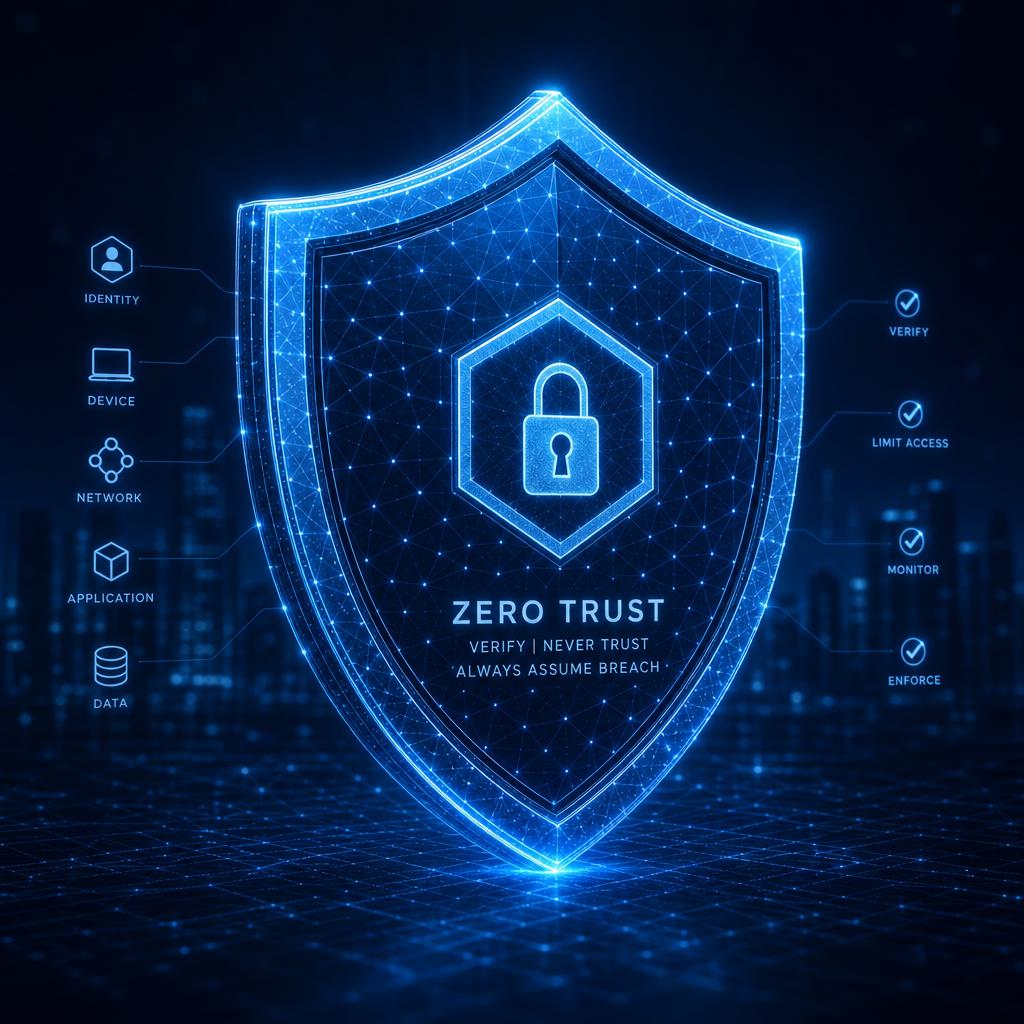
Identity & Access Management
Centralized identity, strong authentication, and least-privilege access across your users and systems.
Identity & Access Management is the discipline of controlling who can access which systems and data, and under what conditions. NexWEB Technologies designs and implements centralized identity, strong multi-factor authentication, single sign-on, and least-privilege access governance across your applications and infrastructure. Because compromised credentials are behind so many breaches, we make identity the enforcement point, ensuring the right people have the right access and nothing more.
The Challenge
Enterprises frequently face severe operational and technical blockers when trying to scale or modernize in this domain. Typical issues include:
- Weak or password-only authentication inviting account takeover
- Excessive and orphaned access accumulating across systems
- Fragmented identities that make access hard to govern and audit
What We Deliver
Authentication & SSO
Implementing strong multi-factor authentication and single sign-on across applications.
Access Governance
Enforcing least privilege with role design, access reviews, and joiner-mover-leaver processes.
Privileged Access Management
Securing and monitoring high-privilege accounts that pose the greatest risk if compromised.
Industry Use Cases
Financial Services
Centralizing identity and enforcing MFA and least privilege across sensitive banking applications.
Healthcare
Governing clinician and staff access to systems handling sensitive patient data with regular access reviews.
Government
Consolidating identities and tightening privileged access across agency systems for auditable control.
Our Approach
Identity Assessment
We inventory identities, applications, and current access to expose gaps, sprawl, and excessive privilege.
Design & Policy
We design authentication, SSO, role models, and access policies grounded in least privilege.
Implementation & Integration
We deploy identity controls and integrate applications, phasing rollout to minimize disruption.
Governance & Review
We operationalize access reviews and lifecycle processes to keep access accurate over time.
Why NexWEB Technologies
- Identity treated as the primary security control point, not an afterthought.
- Least-privilege designs that curb access sprawl without blocking work.
- Lifecycle processes that keep access accurate long after go-live.
Frequently Asked Questions
Why is identity so central to security?
What does least privilege mean in practice?
Can you integrate identity across our existing applications?
How do you protect privileged accounts?
How does IAM support a zero trust model?
Technologies Used
Ideal For
Organizations that need to secure and govern access across a growing set of users, applications, and systems.
Related Services
Ready to execute?
Discuss your projectReady to modernize your mission-critical platforms?
Partner with NexWEB Technologies to securely implement enterprise AI, scale your cloud infrastructure, and build the software that runs your business.