

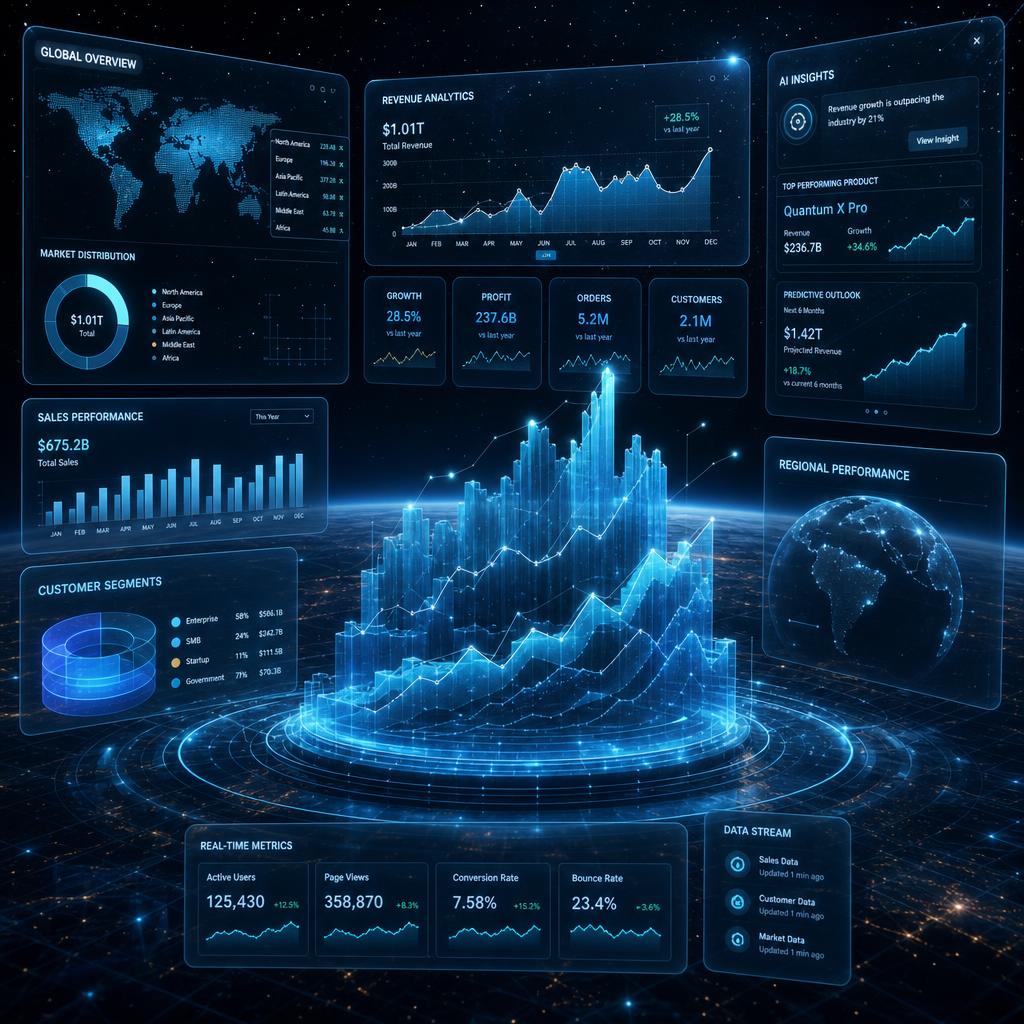
Real-Time Data Streaming
Build event-driven streaming platforms that process and react to data the moment it is created.
Real-Time Data Streaming is the practice of capturing and processing events continuously so systems can react within seconds of data being created. NexWEB Technologies builds event-driven pipelines using durable message platforms and stream-processing engines that transform, enrich, and route data in motion. We design for exactly-once or at-least-once guarantees as your use case requires, with backpressure handling and replayability. The result is timely intelligence that powers live dashboards, alerts, and automated responses.
The Challenge
Enterprises frequently face severe operational and technical blockers when trying to scale or modernize in this domain. Typical issues include:
- Batch pipelines that make critical data hours or days out of date
- Inability to detect and respond to events as they happen
- Tightly coupled systems that break when data flows change
What We Deliver
Event Streaming Platforms
Deploying durable, high-throughput messaging that decouples producers and consumers of data.
Stream Processing
Transforming, aggregating, and enriching data in motion with windowing and stateful operators.
Delivery Guarantees
Engineering ordering, replay, and exactly-once or at-least-once semantics to match reliability needs.
Industry Use Cases
Financial Services
Real-time fraud signals and transaction monitoring that flag anomalies within seconds of an event.
Retail & E-commerce
Live inventory and personalization updates that reflect customer actions the moment they occur.
Manufacturing
Streaming equipment telemetry that triggers alerts before a fault becomes downtime.
Our Approach
Event Modeling
We map the events, sources, and consumers and define latency and reliability requirements for each flow.
Platform & Topology
We design the streaming topology, topic structure, and processing operators for the required guarantees.
Build & Test Under Load
We implement pipelines and validate them under realistic throughput, failure, and replay scenarios.
Operate & Evolve
We monitor lag and throughput, manage schema evolution, and add new consumers without disruption.
Why NexWEB Technologies
- Event-driven designs that decouple systems so new consumers can be added safely.
- Delivery guarantees chosen deliberately to match each use case, not assumed.
- Load and failure testing that proves the platform holds up under real conditions.
Frequently Asked Questions
How is streaming different from faster batch jobs?
What delivery guarantee do we need?
Can streaming integrate with our existing databases?
What happens if a consumer falls behind or fails?
How do you handle changes to event structure over time?
Technologies Used
Ideal For
Organizations that need to detect, process, and act on data the moment it is generated.
Related Services
Ready to execute?
Discuss your projectReady to modernize your mission-critical platforms?
Partner with NexWEB Technologies to securely implement enterprise AI, scale your cloud infrastructure, and build the software that runs your business.